You've studied for the CDL written test, you're working toward your license, and now someone mentions you need a "DOT physical" before you can get behind the wheel commercially. What is it? When do you need it? And what actually happens?
If you're a first-time CDL applicant, this walkthrough is for you. The CDL physical for new drivers is a straightforward process — and knowing what to expect before you walk in the door makes it even easier.
Your First CDL Physical — Where It Fits in Getting Licensed
Here's the short version: you cannot hold a CDL without a valid medical card. That's not a technicality — it's a federal FMCSA requirement that applies to every commercial driver operating a vehicle in interstate commerce.
Before your state can issue your CDL (or before you can keep it), you must pass the FMCSA medical examination and receive a valid medical card. That card proves you meet the physical standards required to safely operate a commercial motor vehicle. Without it, your CDL application stalls.
So where does the physical fit in the timeline? For most new CDL applicants, the sequence looks like this:
- Pass the CDL knowledge test and obtain your Commercial Learner's Permit (CLP)
- Complete your new driver CDL physical and receive your medical card
- Your certification transmits electronically from the FMCSA National Registry to the state — in Florida you no longer submit the paper card yourself
- Complete skills testing and receive your CDL
Some drivers are surprised to learn the medical card requirement kicks in early — not after you're already on the job. Getting your exam done promptly keeps your licensing on track and avoids delays at the DMV.
What to Bring to Your First CDL Physical
First-time drivers sometimes show up unprepared, which can slow things down. Here's a simple checklist of what to bring to your new CDL driver medical exam:
- Photo ID — A valid government-issued ID (driver's license, passport, etc.)
- Medication list — Write down every prescription and over-the-counter medication you take regularly, including dosages. Don't leave anything off — this isn't about passing or failing, it's about accuracy.
- Glasses or contact lenses — If you use corrective lenses for driving, bring them. The vision screening is done during the exam, and you want your best-corrected vision on file.
- Specialist letters or records (if applicable) — If you have a managed medical condition — heart issues, diabetes, sleep apnea, a seizure history — bring documentation from your treating physician. A letter stating your condition is stable and well-controlled can make a real difference in how smoothly your exam goes.
- CPAP compliance data (if applicable) — If you use a CPAP machine, bring your compliance report. Dr. Jacobsen will need to review it.
That's it. No fasting required. No lengthy forms to fill out in advance. Just come prepared with the basics, and you're in good shape.
What Happens During the Exam
The CDL medical exam is a focused physical evaluation — not a full annual checkup. Dr. Jacobsen will assess the body systems that directly affect your ability to safely operate a commercial vehicle. Here's a quick overview of what's covered:
- Vision screening — You'll need to meet minimum acuity standards (20/40 in each eye with or without correction) and demonstrate adequate field of vision and color recognition.
- Hearing test — A basic whisper test or audiometric evaluation to confirm you can hear a forced whispered voice at five feet.
- Blood pressure and pulse — Elevated blood pressure is one of the most common issues flagged during CDL physicals. If yours runs high, it's worth knowing your numbers before exam day.
- Urinalysis — A urine sample is collected to check for indicators like protein or glucose — not for drug testing. (If your employer requires a pre-employment DOT drug test, that's a separate process.)
- Medical history review — You'll complete a health history form covering past conditions, surgeries, medications, and current symptoms. Dr. Jacobsen will review this and discuss anything relevant.
- Physical examination — A hands-on assessment covering your cardiovascular, respiratory, neurological, and musculoskeletal systems.
For a detailed breakdown of each component, see a step-by-step look at the exam — it covers exactly what's tested and what the standards are.
Most drivers are in and out in 20 to 30 minutes. If everything checks out, you'll receive your medical card the same day.
Cost and Timing for New Drivers at OneCare CDL
The CDL physical for new drivers at OneCare CDL is $80. That includes the full FMCSA examination and same-day medical card issuance when you pass.
For a full breakdown of exam pricing across Florida, check out our guide on CDL physical cost in Florida.
A few things to know about scheduling:
- OneCare CDL is appointment-based. There are no walk-in slots — booking in advance ensures Dr. Jacobsen has dedicated time for your exam and that you're not left waiting.
- Same-day medical card — If you pass, you walk out with your medical card in hand. No waiting for paperwork to arrive in the mail.
- Plan for 20–30 minutes — That's the typical exam window for a straightforward new driver visit. If you have a more complex medical history, allow a little extra time.
New drivers sometimes wonder if they need to complete a new driver CDL physical before or after skills testing. The answer depends on your state's CDL process, but getting it done early is always the right move — it removes a major variable from your licensing checklist.
Common Questions from New CDL Applicants
Do new CDL drivers need a physical? Yes. FMCSA regulations require all CDL drivers operating in interstate commerce to pass a DOT physical and hold a valid medical card. This applies to first-time applicants — you must have your medical card before your CDL can be issued.
How much is a CDL physical for a new driver? At OneCare CDL in Daytona Beach, FL, the new driver exam is $80, with same-day medical card issuance.
What do I bring to my first CDL physical? Bring a photo ID, a complete list of your current medications, your glasses or contacts if you use them, and any specialist letters for managed medical conditions.
Does the CDL physical include a drug test? No — the urinalysis during your CDL physical checks for health markers, not controlled substances. If your employer requires a pre-employment DOT drug test, that's scheduled separately. OneCare CDL offers that service too — visit our drug testing page for details.
Book Your First CDL Physical at OneCare CDL
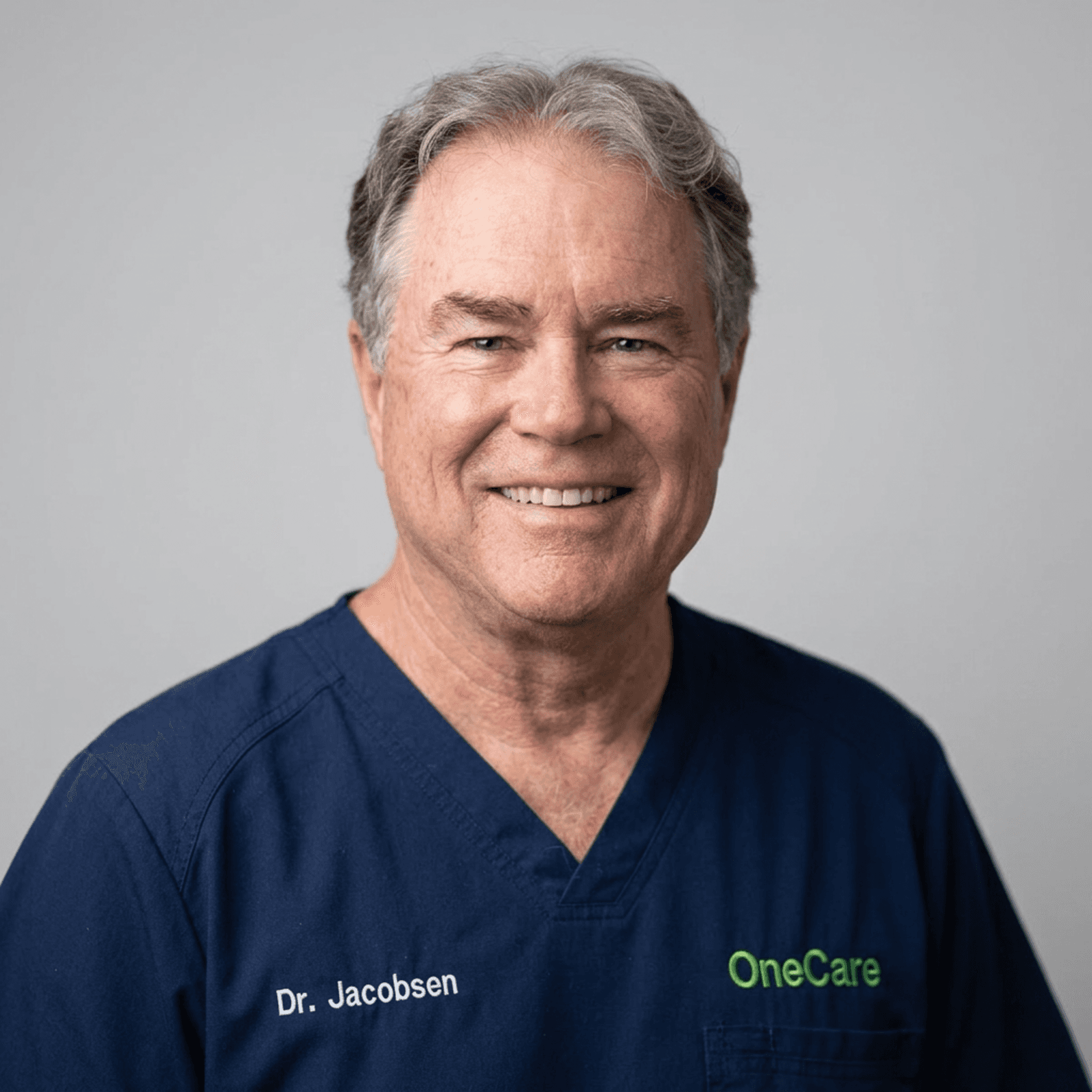
Dr. David Jacobsen is an FMCSA-Certified Medical Examiner with 40+ years of experience. He knows exactly what first-time drivers need, and he'll walk you through the process clearly and efficiently.
OneCare CDL is located in Daytona Beach, FL — conveniently serving new CDL applicants throughout Volusia County and the surrounding area.
Ready to get your medical card and keep your licensing on track?
Book your first exam online, or call us to schedule your appointment. Same-day medical card issuance available when you pass. Don't let the physical be the thing that slows down your CDL — get it done right, get it done fast, and get on the road.