If you hold a CDL, a DOT random drug test is not a matter of if — it's a matter of when. And yet, a lot of drivers don't have a clear picture of how the selection process actually works, what happens the moment they're notified, or what's at stake if a test comes back positive.
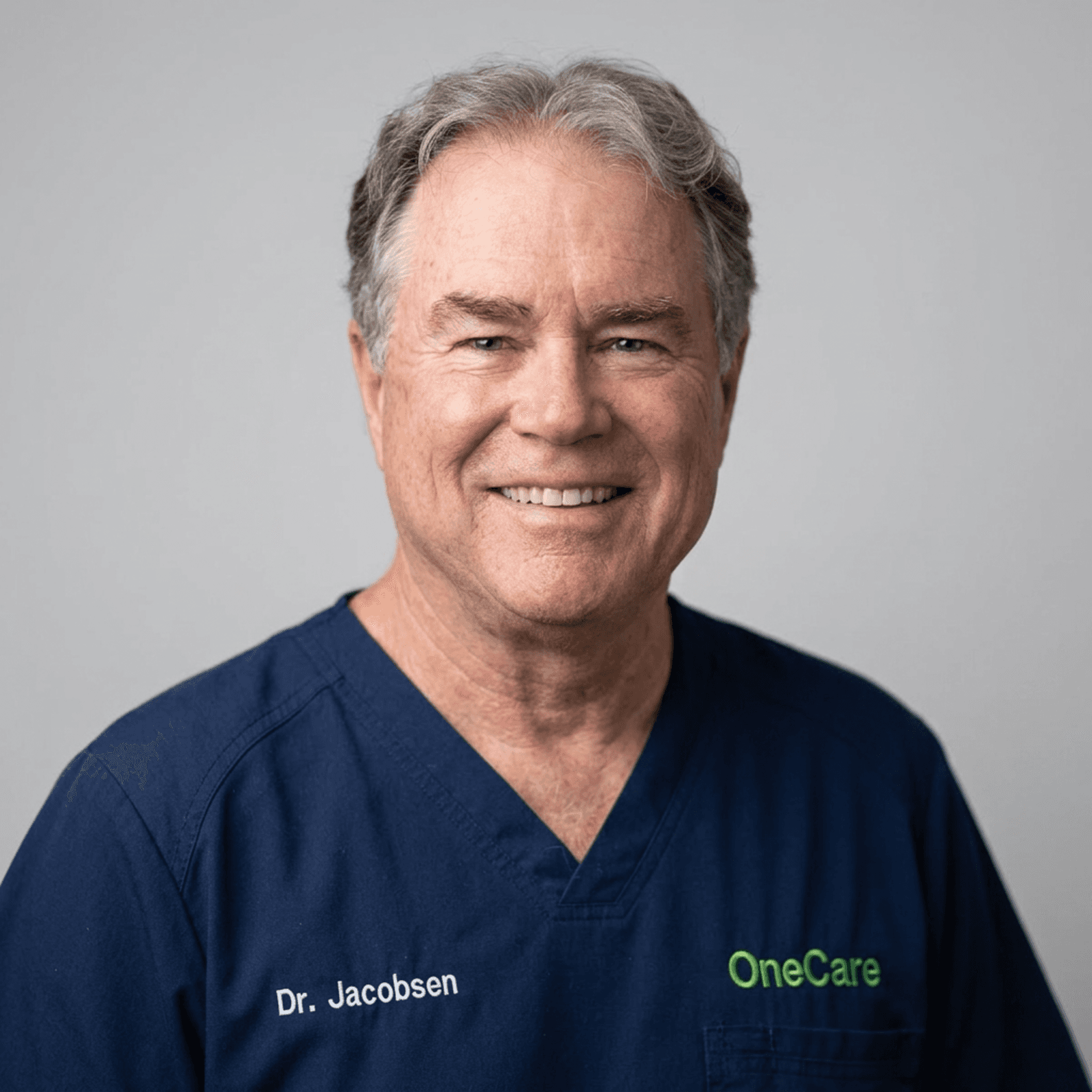
I'm Dr. David Jacobsen, FMCSA-certified medical examiner and founder of OneCare CDL in Daytona Beach, FL. I've been working with commercial drivers for more than 40 years, and one of the questions I hear most often is: "What exactly happens during a random drug test, and what do I need to know?"
This post answers that question completely — plain English, no surprises.
What Is the DOT Drug Testing Program?
The DOT drug testing program is a federal safety requirement administered under 49 CFR Part 40. It applies to any driver who operates a commercial motor vehicle (CMV) requiring a CDL. That means truck drivers, bus drivers, and other safety-sensitive transportation workers across the country are subject to it.
The program covers several types of testing: pre-employment, post-accident, reasonable suspicion, return-to-duty, follow-up, and — the one we're focusing on here — random testing.
The FMCSA sets minimum annual testing rates for motor carriers. For 2026, those rates are:
- 25% of the average number of driver positions for controlled substances (drugs)
- 10% of the average number of driver positions for alcohol
These rates apply to all FMCSA-regulated carriers, and they can be adjusted year to year based on industry-wide positive test data. The 2026 rates reflect a continued federal commitment to roadway safety — and they mean that if you're a CDL driver at an active motor carrier, the odds of being selected in any given year are real.
For a full breakdown of CDL drug test requirements, visit our DOT drug testing guide for commercial drivers.
How Random Selection Actually Works
Here's the part most drivers are fuzzy on: random selection is truly random. Your employer doesn't choose you. Your supervisor doesn't target you. A scientifically valid random number generator — managed either by the motor carrier's internal program administrator or a third-party consortium — selects driver IDs from a pool.
Every CDL driver in a safety-sensitive role must be in a random testing pool. Each driver has an equal chance of being selected every time a draw occurs, and being selected once does not remove you from future draws. You can be selected multiple times in a year, or not at all — that's the nature of a truly random program.
Once selected, the process moves quickly — and that's intentional.
Step-by-Step: What Happens When You're Selected for a DOT Random Drug Test
Step 1: You Receive Immediate Notification
When your name comes up in a random draw, your employer's Designated Employer Representative (DER) is notified. They are required to notify you immediately and direct you to the collection site. You must proceed to the collection site without delay — stopping to eat, run errands, or go home first is not acceptable under DOT rules.
Step 2: You Go to a DOT-Compliant Collection Site
The collection site must follow strict federal protocols. A trained collector will verify your identity (government-issued photo ID required), complete the Federal Drug Testing Custody and Control Form (CCF), and walk you through the urine collection process.
The DOT 5-panel drug test screens for:
- Marijuana (THC)
- Cocaine
- Amphetamines (including methamphetamine and MDMA)
- Opiates (including heroin, codeine, and morphine)
- Phencyclidine (PCP)
The specimen is split into two bottles — a primary and a split specimen — and sent to a SAMHSA-certified laboratory for analysis.
Step 3: The Lab Analyzes Your Specimen
The certified laboratory performs an initial immunoassay screen. If the screen is negative, the result is reported as negative and the process ends. If the initial screen shows a positive result, the lab performs a confirmatory GC-MS (gas chromatography-mass spectrometry) test before anything is reported.
Step 4: The MRO Reviews Your Result
Every non-negative result goes through a Medical Review Officer (MRO) — a licensed physician trained in drug testing interpretation. The MRO contacts you directly before finalizing a positive result to give you an opportunity to provide a legitimate medical explanation (for example, a valid prescription for certain substances).
If a valid medical explanation exists, the MRO may report the result as negative. If not, the result is reported as positive to your employer and, critically, to the FMCSA Drug and Alcohol Clearinghouse.
The FMCSA Clearinghouse: Why It Matters to Every CDL Driver
The FMCSA Drug and Alcohol Clearinghouse is a federal database that tracks drug and alcohol program violations for CDL drivers. A positive DOT random drug test result — or a refusal to test — is entered into the Clearinghouse and is visible to any prospective employer who queries your record.
This is not a local record. It follows you nationally.
Employers are required to query the Clearinghouse before hiring any CDL driver, and annually for all current drivers. If there's a violation in your record that hasn't been resolved, you cannot legally operate a CMV — regardless of which state you're in or which company you're applying to.
For a complete guide to the Clearinghouse, read our post on the FMCSA Drug and Alcohol Clearinghouse for CDL drivers.
DOT Random Drug Test Positive Consequences: What Happens Next
A positive result — or a refusal to test, which DOT treats the same as a positive — triggers an immediate removal from safety-sensitive duties. You cannot drive your CMV until the Return-to-Duty process is complete.
Here's what that process involves:
- Evaluation by a Substance Abuse Professional (SAP) — A qualified SAP evaluates you and recommends a course of education or treatment.
- Compliance with the SAP's recommendations — You must follow through on whatever the SAP prescribes before moving forward.
- Return-to-Duty test — Before you can drive again, you must pass a directly-observed Return-to-Duty drug test with a negative result.
- Follow-up testing program — After returning to duty, you're subject to a minimum of 6 unannounced follow-up tests in the first 12 months (and potentially more over up to 60 months).
This process is involved, takes time, and affects your livelihood. The most practical thing any driver can do is understand the rules, stay compliant, and know where to get tested through a properly credentialed collection site.
Does a DOT Physical Include a Drug Test?
This is one of the most common questions I hear at OneCare CDL. The short answer: not automatically.
Your DOT physical and your DOT drug test are two separate federal requirements. A CDL physical determines your medical fitness to drive. A drug test — whether random, pre-employment, or post-accident — is part of the employer's drug and alcohol testing program.
However, many drivers choose to complete both on the same visit when possible. We offer a convenient CDL Physical + Drug Test Combo for exactly that reason. For a deeper dive into the relationship between the two, see our post: Does a DOT Physical Include a Drug Test?
Common Questions CDL Drivers Ask About Random Drug Testing
Can I refuse a random test? No. A refusal is treated as a positive result under DOT rules — same consequences, same Clearinghouse entry, same Return-to-Duty process required.
What if I'm on a prescription medication? Disclose it to the MRO during the review process. The MRO exists specifically to evaluate legitimate medical explanations. Don't assume a prescription automatically disqualifies you — let the MRO make that determination.
How much notice do I get before a random test? Essentially none — and that's by design. You're notified and expected to proceed immediately.
Can I use CBD products as a CDL driver? This is a significant risk area. CBD products are not reliably free of THC, and DOT does not accept a positive THC result on the basis of CBD use. Our guidance: avoid it.
OneCare CDL: A DOT-Compliant Collection Site Serving Daytona Beach and the I-95 Corridor
At OneCare CDL in Daytona Beach, FL, we operate as a fully DOT-compliant drug testing collection site. Our collectors follow all 49 CFR Part 40 protocols, maintain strict chain of custody, and use SAMHSA-certified laboratory partners for lab-confirmed results.
We offer:
- DOT Drug Test (Lab-Confirmed) — the standard for random, pre-employment, and post-accident testing
- Drug Test (Instant Result) — a rapid screen for non-DOT testing, such as an employer's own pre-employment policy; DOT-required tests use the lab-confirmed test
- CDL Physical + Drug Test Combo — complete both in a single visit
We are appointment-based to make sure you're seen promptly and your paperwork is handled correctly — because when a DER sends you for a random test, timing matters.
Learn more about our full DOT drug testing services or our CDL physical exam options.
Ready to Schedule?
Whether you've been selected for a random test, you're starting a new job, or you want to get your CDL physical and drug test handled in one stop — OneCare CDL is here to help.
Book your appointment online at our booking page or call us directly at (386) 226-0011.
Dr. David Jacobsen and the OneCare CDL team are ready to help you stay compliant and informed every step of the way.